
LinkedIn marketing is important because it allows businesses to:
- Reach a large and targeted audience of professionals. LinkedIn has over 830 million members in over 200 countries and territories worldwide. Businesses can use LinkedIn to target their marketing messages to specific demographics, such as job title, industry, company size, and location.
- Build relationships with potential customers and partners. LinkedIn is a great way to connect with people, share content, and participate in discussions. This helps businesses to establish themselves as experts in their field and build trust with potential customers.
- Generate leads. LinkedIn can be a great way to generate leads. Businesses can use the platform to find potential customers, connect with them, and nurture them through the sales funnel.
- Increase brand awareness. LinkedIn can help businesses to increase brand awareness by sharing their content and engaging with their audience.
- Drive traffic to their website. Businesses can use LinkedIn to drive traffic to their website by sharing links to their blog posts, landing pages, and product pages.
If you send out LinkedIn InMails and struggle to get a response, check out these scripts that gets a response!
https://munierk.gumroad.com/l/linkedininmails
Here are some examples of how businesses are using LinkedIn marketing to achieve their goals:
- A software company uses LinkedIn to generate leads. The company creates and shares high-quality content that is relevant to its target audience. The company also uses LinkedIn ads to target its marketing messages to specific demographics. As a result of this strategy, the company is able to generate a significant number of leads from LinkedIn.
- A marketing agency uses LinkedIn to build relationships with potential clients. The agency shares its expertise and insights through blog posts, articles, and videos. The agency also participates in industry groups and discussions. As a result of this strategy, the agency has been able to build relationships with a number of potential clients and secure new business.
- A staffing agency uses LinkedIn to find new employees. The agency uses LinkedIn to search for candidates with the skills and experience it is looking for. The agency also uses LinkedIn to post job openings and connect with potential candidates. As a result of this strategy, the agency is able to find qualified candidates for its clients.
Crafting this content is not going to come naturally, so ensure that you user some AI Tools to help you craft content, pictures, videos etc. AI Tools such as Jasper, Surfer SEO, Getjenie, Pictory, Writesonic, and Fliki.ai
These are just a few examples of how businesses are using LinkedIn marketing to achieve their goals. LinkedIn is a powerful tool that can help businesses of all sizes to reach their target audience, build relationships, generate leads, and increase brand awareness.
5 Ideas to Find Great Content and Keywords for Your Business on LinkedIn:
1. Follow Industry Influencers: Identify and follow key influencers and thought leaders in your industry. Pay attention to the topics they discuss, as this can give you insights into trending keywords and content ideas.
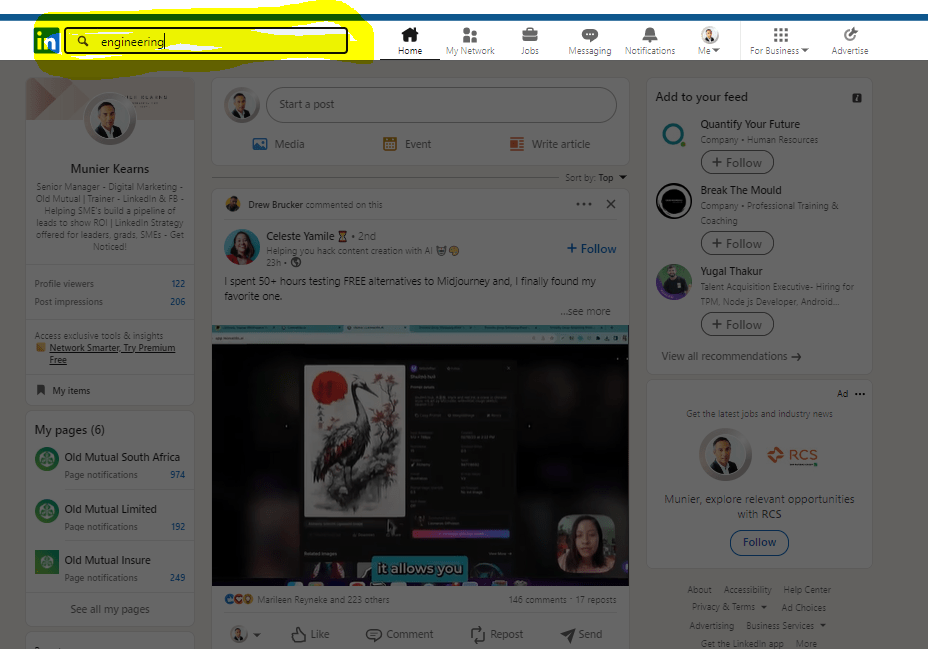
2. Use LinkedIn’s Search: Use LinkedIn’s search function to find content related to your industry. You can search for keywords, hashtags, or specific topics to discover what’s currently trending.
3. Join and Participate in Relevant Groups: LinkedIn groups are great for finding discussions on specific topics related to your business. Join groups relevant to your industry and explore the conversations to identify popular keywords and content ideas.
4. Monitor Competitors: Keep an eye on your competitors’ LinkedIn activity. See which content gets the most engagement and identify the keywords they are targeting. You can use these insights to shape your own content strategy.
5. Set up Google Alerts: While not a LinkedIn-specific tool, you can set up Google Alerts for industry-related keywords. This will notify you of any new content and discussions on the web, including LinkedIn, related to those keywords.

5 Ideas on How to Respond to Content on LinkedIn to Get Noticed:
1. Thoughtful Comments: When you come across posts or articles relevant to your expertise, leave thoughtful and insightful comments. Engaging in meaningful discussions can help you get noticed by the author and others in the thread.
2. Share Your Perspective: If you have a unique perspective or additional insights on a topic, consider writing your own short post or article and share it as a comment on the original post. This can help you stand out as an expert.
3. Connect with Content Creators: After engaging with someone’s content, consider sending them a personalized connection request. This can lead to more meaningful connections and interactions.
4. Ask Questions: If you have questions related to the content or the topic being discussed, don’t hesitate to ask. It shows your interest and engagement in the subject.
5. Create Your Own Content: To get noticed, don’t just respond to others’ content—create your own. Share your insights, experiences, and expertise by posting articles, images, or videos. Use relevant keywords and hashtags to increase the visibility of your content.

By actively engaging with content and providing value through your comments and your own posts, you can build your presence and reputation on LinkedIn, ultimately getting noticed by your target audience.
The type of content that drives the best results on LinkedIn can vary depending on your specific goals and target audience. Here are a few content types that often yield good results:
1. Educational Content: Sharing informative articles, tips, and how-to guides relevant to your industry can position you as an expert in your field and provide value to your network.
2. Thought Leadership Posts: Posting well-reasoned opinions and insights on industry trends, challenges, or innovations can attract engagement and showcase your expertise.
3. Visual Content: Images, infographics, and videos can capture attention and quickly convey information. Videos, in particular, are gaining popularity on LinkedIn.
4. Success Stories and Case Studies: Sharing real-world examples of how your products or services have helped clients or customers can build trust and demonstrate the value you provide.
5. Company News and Updates: Announcing company achievements, new product launches, or significant milestones can keep your network informed and engaged.
6. User-Generated Content: Encouraging your customers or clients to share their experiences with your products or services can be a powerful way to build credibility and trust.
7. Personal Stories and Insights: Sharing personal anecdotes related to your professional journey or lessons you’ve learned in your career can make your content relatable and engaging.
8. LinkedIn Polls and Surveys: Creating polls and surveys can encourage interaction and help you gather valuable insights from your network.
9. Long-Form Articles: LinkedIn allows you to publish long-form articles. These can be in-depth pieces on industry topics, insights, or even personal experiences.
10. Relevant News and Current Events: Sharing industry-related news and discussing its implications can show your network that you’re staying up-to-date and can prompt meaningful conversations.
Remember to use relevant keywords and hashtags in your posts to increase visibility, and engage with your audience by responding to comments and messages. It’s also important to maintain consistency in your posting schedule to keep your network engaged and informed. The best content for you will depend on your specific goals and the preferences of your target audience.
Shout if you need help!
 digital-dynasty.co.za
Leave a comment